
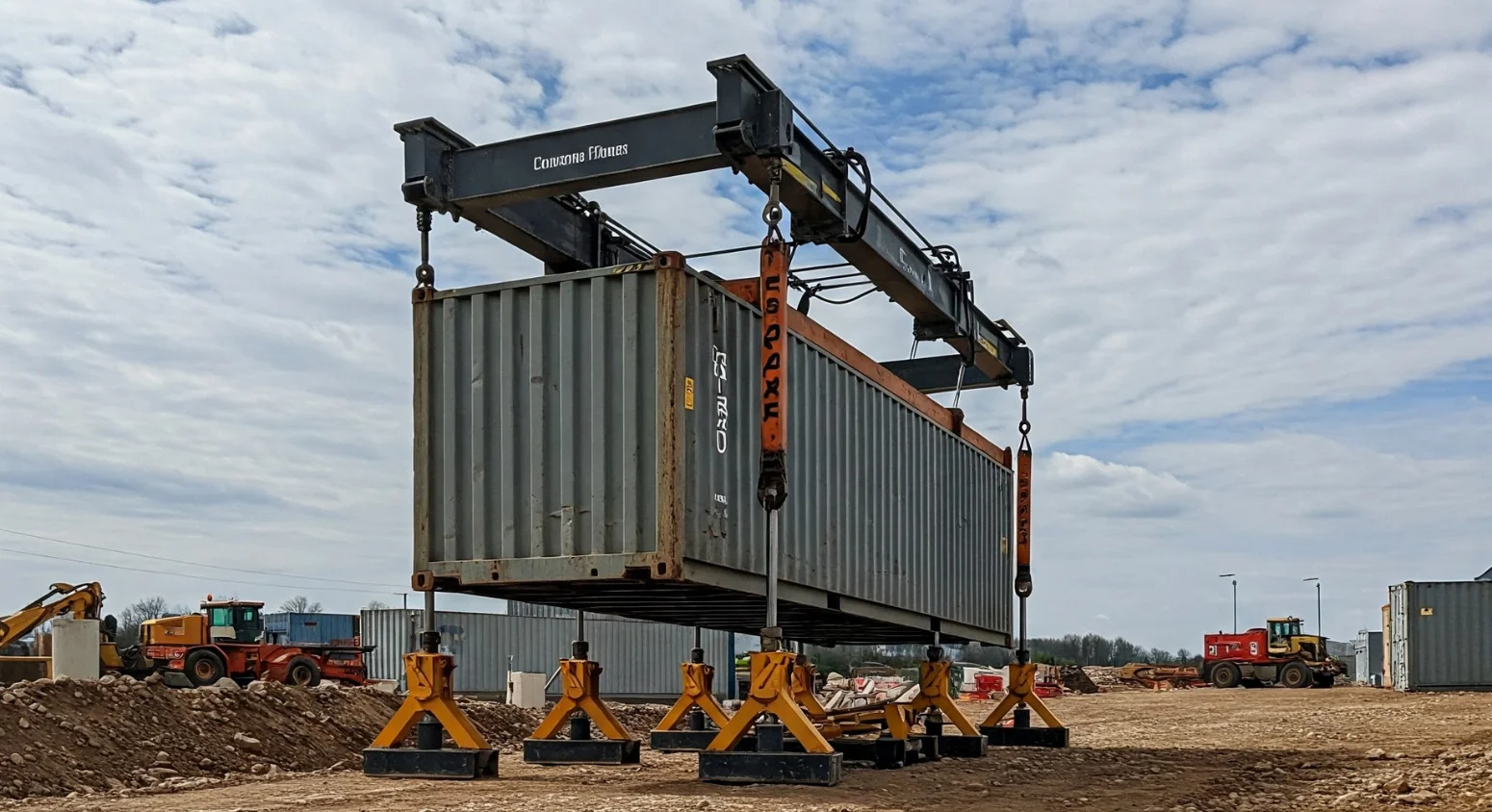

Lifting a shipping container on uneven ground is never simple—and using the wrong container lifting jacks can turn the job into a risky, unstable challenge. Whether you’re setting up a remote storage site, working on rough terrain, or repositioning a container on a busy job site, the key to a safe lift is having equipment built for the conditions. But not all jacks can handle shifting surfaces or heavy loads with equal stability.
In this guide, we break down the top jack options for uneven terrain, the must-have features that ensure control and balance, and essential safety tips. By the end, you’ll know exactly which container lifting jacks to choose and how to use them confidently on any terrain.
Quick Answer:
Lifting a shipping container on uneven terrain requires heavy-duty, stable jacks designed for rough ground. The blog explains that hydraulic and integrated lifting systems offer the best balance of strength, control, and safety. It also highlights the importance of features like adjustable height, wide bases, and high load capacity. Overall, choosing the right jack and following proper lifting steps ensures safer, smoother container handling on challenging surfaces.
Table of Contents
Understanding the Challenges of Lifting Containers on Uneven Terrain
Have you ever tried lifting a shipping container on rough or sloped ground? If so, you know how tricky it can be. Uneven terrain creates a serious challenge, making stability a top priority. Without the right container lifting jacks, you risk tilting, slipping, or even damaging the container—and that’s not a situation anyone wants to deal with.
Why Uneven Terrain Makes Lifting Difficult
Before choosing a container jack, it’s important to understand why lifting on uneven ground is different from a flat, stable surface.
Here’s what you’re up against:
- Shifting weight distribution – When the ground isn’t level, the container’s weight isn’t evenly supported, increasing the risk of tipping.
- Limited jack placement options – Finding secure footing for jacks can be tough on rough or rocky terrain.
- Safety concerns – Without proper balance, lifting a container with container lifting jacks can become unpredictable and dangerous.
The Right Equipment Makes All the Difference
Not all container lifting jacks are built to handle uneven ground. Choosing the right container lifting jacks can mean the difference between a smooth, controlled lift and a risky, unstable operation. The best options are designed with features like:
- Adjustable height – Helps compensate for uneven surfaces, ensuring a level lift.
- Wide, stable bases – Prevents jacks from sinking or shifting on soft or rough terrain.
- Heavy-duty construction – Built to withstand the extra strain of lifting on non-level ground.
Key Considerations Before Lifting
If you’re preparing to lift a container using container lifting jacks in an area with uneven terrain, take these steps to improve safety and efficiency:
- Assess the ground conditions – Identify soft spots, slopes, or obstacles that could affect stability.
- Choose the right lifting method – Hydraulic jacks, mechanical jacks, or a combination may be needed for better control.
- Secure the container – Proper positioning ensures an even lift and reduces shifting risks.
- Work slowly and carefully – Rushing the process increases the chances of an accident.
Lifting on uneven ground isn’t impossible—it just requires the right approach and the best container lifting jacks for the job. In the next section, we’ll dive into the different types available and which ones work best for challenging terrain.
Did you know?
- Standard 20′ containers weigh around 5,000 lbs empty and 40′ containers can exceed 8,000 lbs empty—always pick jacks rated above the container’s weight.
- Integrated lifting systems use multiple adjustable lifting points to distribute weight evenly, making them the safest choice on highly uneven ground.
- Hydraulic jacks give smooth, powerful lifts but still need wide, stable bases to avoid sinking or tipping on soft terrain.
- Key design features for rough surfaces include adjustable height, wide/secure footing, and locking mechanisms for controlled, safe lifts.
Types of Container Lifting Jacks and Their Suitability for Uneven Terrain
Lifting a shipping container isn’t a one-size-fits-all job, especially when the ground is rough or uneven. The type of container lifting jacks you use can make the difference between a smooth, controlled lift and a risky, unstable situation. So, how do you know which one is right for the job?
Let’s go over the most common container lifting jacks, their strengths, and which ones work best for uneven terrain.
1. Hydraulic Jacks – Strong and Reliable
Hydraulic jacks are one of the most popular choices because they provide powerful lifting with minimal effort. They use fluid pressure to raise heavy loads smoothly and are great for handling shipping containers.
Best for:
- Heavy lifting with less manual effort
- Smooth and controlled operation
- Working on uneven terrain when paired with stabilizing supports
Things to consider:
- Needs a solid base to prevent sinking into soft ground
- More expensive than manual options
2. Mechanical Jacks – Precise but Manual
Mechanical jacks use gears and levers to lift containers. They offer a lot of control but require more physical effort than hydraulic options.
Best for:
- Gradual, controlled lifting
- Smaller budgets
- Situations where fine adjustments are needed
Things to consider:
- Slower and more labor-intensive than hydraulic jacks
- Can be harder to use on unstable ground
3. Pneumatic Jacks – Fast but Limited
Pneumatic jacks use compressed air to lift containers quickly. While they work well in certain settings, they aren’t always the best choice for rough or uneven terrain.
Best for:
- Quick lifting when the ground is stable
- Lightweight and easy to transport
Things to consider:
- Less stable on sloped or uneven ground
- Requires an air compressor to function
4. Integrated Lifting Systems – Maximum Stability
For the most difficult lifting jobs, an integrated lifting system combines multiple jacks to keep the container stable. These systems distribute the weight evenly, making them the safest choice for rough terrain.
Best for:
- Lifting containers on highly uneven ground
- Large, heavy-duty lifting projects
- Ensuring maximum stability and safety
Things to consider:
- More complex to set up
- Higher cost compared to single-jack options
Picking the Right Container lifting Jacks for Uneven Terrain
If you’re working on rough ground, keep these points in mind:
- Stability is key – Hydraulic or integrated systems offer better balance.
- Adjustable features help – A jack with height adjustments can make lifting safer.
- A strong base matters – Wide, sturdy footing prevents the jack from slipping or shifting.
The right container jack makes all the difference when working on uneven surfaces. In the next section, we’ll take a closer look at why LiftWich is one of the best options for handling these tough conditions.
Why LiftWich is the Best Solution for Uneven Terrain
When it comes to lifting a shipping container on uneven ground, stability and control are everything. Many jacks struggle with shifting weight, soft soil, or sloped surfaces, making the job difficult and risky. That’s where LiftWich stands out. Designed specifically for challenging conditions, it offers the strength, precision, and safety needed to lift containers with confidence.
Built for Stability on Any Surface
One of the biggest challenges with uneven terrain is keeping the container level throughout the lift. Unlike traditional container jacks, which often require a perfectly flat surface, LiftWich is designed to handle rough or sloped ground.
Here’s how it ensures a stable lift:
- Independent lifting points – Each point can be adjusted individually to compensate for uneven surfaces.
- Strong, wide footing – Prevents sinking or shifting, even on soft or unstable ground.
- Secure weight distribution – Keeps the container balanced to reduce the risk of tipping.
Easy to Use, Even in Tough Conditions
Lifting a shipping container is already a heavy-duty job—you don’t want equipment that makes it harder. LiftWich is designed with ease of use in mind, so you can get the job done quickly and safely, no matter the terrain.
Key advantages include:
- Simple setup – No need for complex rigging or multiple operators.
- Versatile application – Works with different container sizes and weights.
- Controlled lifting process – Ensures smooth, even movement without sudden shifts.
A Safer Alternative to Traditional Jacks
Safety is always a top concern when lifting a heavy container, especially on rough ground. Many standard shipping container jacks aren’t built for uneven terrain, which increases the risk of accidents. LiftWich helps minimize those risks by providing:
- Better control over lifting height – Allows for precise adjustments.
- Secure locking mechanisms – Keeps the container in place during the lift.
- Heavy-duty construction – Built to handle high weight loads without failure.
Why LiftWich is the Smart Choice
If you need to lift a container on sloped, rocky, or uneven ground, LiftWich is one of the best solutions available. Its combination of stability, ease of use, and safety features make it the ideal tool for anyone working in tough conditions.
In the next section, we’ll explore key features to look for when choosing the best container lifting jacks, so you can make an informed decision for your specific needs.
Key Features to Look for in Container Lifting Jacks for Uneven Terrain
Not all container lifting jacks are designed to handle rough or uneven ground. If you’re working on sloped, rocky, or soft terrain, choosing the right jack is crucial for both safety and efficiency. But what exactly should you be looking for?
Here are the most important features to consider when selecting the best shipping container jack for challenging conditions.
1. Adjustable Height for Uneven Ground
One of the biggest issues with lifting on rough terrain is dealing with height differences. A jack with adjustable lifting points allows you to:
- Compensate for sloped or unlevel ground to keep the container balanced.
- Make precise adjustments to ensure a controlled and even lift.
- Prevent unnecessary strain on one side of the container, reducing the risk of tipping.
Hydraulic and mechanical jacks with adjustable height settings are often the best choices for uneven surfaces.
2. Wide, Stable Base for Extra Support
A narrow base can sink into soft ground or tip over on a rough surface. That’s why a container jack with a wide, sturdy base is essential. Look for:
- Reinforced footing to distribute weight evenly.
- Slip-resistant design for added grip on dirt, gravel, or concrete.
- Heavy-duty materials that won’t bend or shift under pressure.
The wider the base, the more stable the jack will be—especially when dealing with heavy loads.
3. High Weight Capacity for Secure Lifting
Shipping containers are heavy, and lifting them requires serious strength. Choosing a jack that can handle the weight of your container is non-negotiable. Keep in mind:
- Standard 20-foot containers weigh around 5,000 lbs empty and much more when loaded.
- 40-foot containers can exceed 8,000 lbs empty, requiring jacks with higher lifting capacity.
- Always choose a jack rated above your container’s weight to ensure safe operation.
For heavy-duty lifting, hydraulic jacks or integrated lifting systems are often the best options.
4. Durability for Tough Conditions
If you’re working on uneven terrain, your shipping container jack needs to withstand rough handling, dirt, and unpredictable weather. The best jacks for the job are:
- Made from heavy-duty steel or reinforced alloys for long-lasting performance.
- Resistant to rust and corrosion, especially if used outdoors.
- Designed to work in extreme temperatures and rugged environments.
A durable jack means fewer breakdowns and a safer lifting process.
5. Safety Features for Controlled Lifting
Lifting a container isn’t just about power—it’s about control. A high-quality jack should have built-in safety features to prevent accidents, such as:
- Locking mechanisms to hold the container securely in place.
- Slow-release valves for smooth and controlled lowering.
- Emergency shut-off options in case of sudden shifts or failures.
Safety should always be the top priority when choosing a container jack for rough terrain.
Making the Right Choice
The right container lifting jack makes all the difference when working on uneven ground. Prioritize stability, weight capacity, and safety features to ensure a smooth and secure lift. In the final section, we’ll go over some best practices for using your jack safely and effectively in challenging environments.
Conclusion
Lifting a shipping container on rough or uneven ground doesn’t have to be complicated. With the right container lifting jack, you can work safely, efficiently, and with full control—whether the terrain is rocky, sloped, or soft. The key is choosing equipment built for stability, strength, and balanced lifting.
If you frequently work in challenging environments, a solution like LiftWich is a smart choice. It’s engineered to handle uneven surfaces, distribute weight evenly, and provide a secure, controlled lift. But regardless of the jack you use, always remember the essentials: assess the ground before lifting, choose equipment with the right capacity, lift slowly and evenly, and prioritize safety from start to finish.
With the right approach and reliable tools, even the toughest terrain becomes manageable.
Frequently Asked Questions
1. What type of jack should I use for uneven ground?
A hydraulic or heavy-duty mechanical container jack with adjustable height is best for rough terrain. It provides more control and stability.
2. Can I use a regular car jack to lift a shipping container?
No, regular car jacks aren’t built to handle the weight and size of a shipping container. Always use a jack designed specifically for containers.
3. How do I stop my jack from sinking into soft ground?
Place a solid support under the jack, like a steel plate or thick wooden board, to spread out the weight and prevent sinking.
4. Is it safe to lift a container alone?
It’s always safer to have someone help you, especially if you’re using multiple jacks. A second set of eyes can help spot any issues before they become a problem.
5. How do I know if my jack is strong enough?
Check the jack’s weight capacity. A standard shipping container weighs around 5,000–8,000 lbs empty, so your jack should be rated well above that for safety.


