
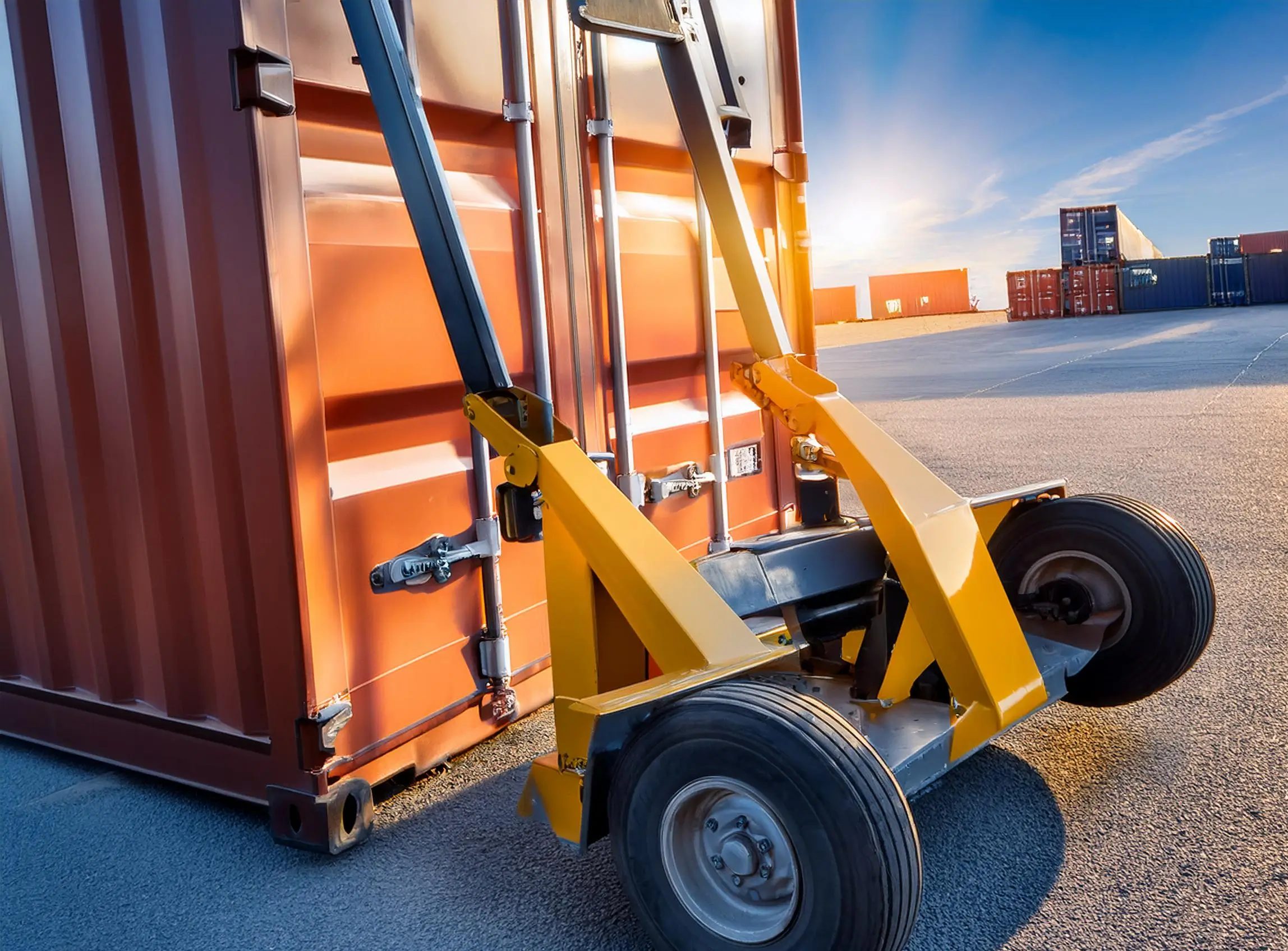

Have you ever found yourself wondering how to safely and efficiently move a heavy shipping container without relying on forklifts or cranes? If so, you’re not alone. As operations grow and storage needs evolve, many businesses are turning to shipping container dollies as a smarter, more flexible alternative. These compact yet powerful tools are transforming how containers are handled across construction sites, warehouses, and industrial yards.
Whether you’re planning to move containers with dollies for the first time or looking to refine your current handling process, understanding the right techniques can save you time, reduce risk, and extend the life of your equipment. But simply having the right gear isn’t enough. Knowing how to use shipping container dollies properly is key to ensuring safe and successful transport every time.
In this blog, we’ll break down the best practices for using shipping container dollies, from preparation and loading to navigation, maintenance, and compliance. You’ll gain practical insights that not only improve efficiency but also protect your team and assets. Ready to roll into smarter container mobility? Let’s get started.
Table of Contents
1. Understanding Shipping Container Dollies
If you’ve ever had to move a heavy container across a yard or job site, you know how challenging it can be. That’s where shipping container dollies come in—compact yet powerful tools designed to move containers without the need for forklifts or cranes.
At their core, container dollies are wheeled platforms built to handle the size and weight of shipping containers. They’re widely used in construction zones, warehouses, event setups, and even emergency response operations—where fast, flexible mobility is critical.
Why Use Container Dollies?
Let’s break it down:
- Save time and labor – No more waiting for forklifts
- Maneuver in tight spaces – Ideal for crowded sites
- Protect your gear and surfaces – No dragging, no damage
TriWich Wheel Dollies: Built for the Real World
Looking for dollies that can handle rugged terrain and real-world use? TriWich’s Wheel Dollies are built for serious performance. With a heavy-duty frame, smooth mobility, and full compatibility with TriWich tools like LiftWich, they’re designed to move containers efficiently—even in challenging environments.
Key Features to Know
- Swivel or fixed wheels for control
- Braking systems for safety
- Adjustable saddles to fit your container securely
Understanding the basics of shipping container moving equipment is the first step. Up next, we’ll cover how to prepare for safe and efficient use—because using the right dolly is only half the equation.
2. Preparing for Safe and Efficient Use
Before you roll out your shipping container dolly, there’s one step you can’t afford to skip: preparation. It’s the difference between a smooth operation and one that’s risky or damaging. So how do you set up for success?
Let’s walk through the most important things to check before you use shipping container dollies—because moving a container isn’t just about wheels and muscle. It’s about knowing your equipment, your load, and your environment.
Inspect Your Equipment First
Would you drive a car without checking the brakes? The same rule applies here.
Make sure to:
- Check the wheels for wear, cracks, or flat spots
- Confirm that bolts and frames are secure
- Test any locking mechanisms or brakes
Even the toughest shipping container dolly can underperform if it’s not properly maintained.
Evaluate the Surface and Terrain
Not all ground is dolly-friendly. Ask yourself:
- Is the path smooth, stable, and debris-free?
- Are there slopes, loose gravel, or soft spots?
- Do you have enough clearance to maneuver?
Identifying problem areas early can prevent delays—or worse, accidents.
Know Your Container
Not all containers are the same. Check:
- The weight of the loaded container
- How the load is distributed
- Whether the container base is compatible with your dolly
Unbalanced weight can make the move unsafe or damage your container dollies. Distribute cargo evenly before lifting or shifting.
Use the Right Tools for the Job
Pair your dollies with lifting equipment like jacks or systems designed for this task. TriWich offers complementary tools that work seamlessly with their Wheel Dollies, such as the LiftWich—making the lifting process safer and more controlled.
Safety First, Always
If you’re not confident about the setup, don’t proceed. It’s worth taking the extra time to:
- Double-check alignment
- Communicate with your team
- Wear the proper safety gear
A few extra minutes spent preparing can save hours in damage control later.
3. Loading and Unloading Best Practices
Now that everything’s set up and your container dollies are ready, it’s time to load your container and unload container the right way. This step is where things can either go very smoothly—or go very wrong. Taking your time here can save your equipment, protect your team, and make the whole move safer and easier.
So, how do you move a container with dollies without problems? Let’s walk through it step by step.
Step 1: Place the Dollies Correctly
Start by making sure the ground is flat and solid. Then:
- Slide the dollies under the corners of the container
- Make sure they’re even on both sides
- If your dollies have brakes, lock them before you lift anything
A wrong setup at this point can cause the container to shift or lean when moving.
Also Read: How Fast Can You Go with a Shipping Container Dolly?
Step 2: Lift the Container Safely
You’ll need a tool like a jack to lift your container or the TriWich LiftWich to raise the container off the ground. Don’t try to lift too much at once.
- Lift one corner at a time, just enough to slide the dolly in
- Keep your hands and feet away from the lifting points
- Lower the container slowly onto the dollies
This part takes patience, but it’s key to doing it safely.
Step 3: Make Sure the Container is Secure
Once the container is resting on the dollies:
- Check that it’s sitting flat and centered
- Use straps or locks to keep it from sliding
- Make small adjustments if anything looks uneven
An unbalanced container is harder to control and could roll or tip.
Step 4: Talk to Your Team
Moving a heavy container isn’t a one-person job. Good communication keeps everyone on the same page.
- Decide who’s guiding, who’s pushing, and who’s watching for obstacles
- Use simple signals or hand gestures if it’s noisy
- Make sure the path is clear before you start moving
When you use shipping container dollies with good teamwork and careful planning, the process becomes smoother and safer.
Getting the loading and unloading part right sets you up for success. Next, we’ll look at how to move the container around safely—especially in tight or tricky spots.
Explore: Right Container Dolly for Military and Industrial Use
4. Navigating Movement and Maneuvering
Once your container is loaded and secure, it’s time for the part that matters most—moving it safely and smoothly. Whether you’re working in a wide-open yard or a tight warehouse, how you steer and control the container makes all the difference.
So how do you make sure the move is both safe and efficient? It all comes down to planning, awareness, and knowing how to use dollies the right way.
Plan Your Route First
Before the wheels start turning, take a moment to walk the path. Ask yourself:
- Is the surface smooth and level?
- Are there any slopes, cracks, or obstacles?
- Will the container fit through tight areas or turns?
Even a small bump or uneven spot can make it harder to move containers with dollies, especially when they’re fully loaded.
Use Slow, Controlled Movements
The key to good dolly handling is staying in control.
- Push or pull slowly—rushing can cause tipping
- Use steady, even pressure to guide the container
- Watch both ends of the container to avoid collisions
If you’re working on a slope or uneven ground, go even slower. Let the shipping container moving equipment do the work, not brute force.
Have a Spotter (Always)
Don’t try to move heavy containers alone. Having someone watch your blind spots is one of the simplest ways to prevent accidents.
- Assign one person to guide and signal
- Make sure you can see each other at all times
- Use radios or hand signals for clear communication
When you use dollies in busy spaces like job sites or warehouses, visibility and teamwork are just as important as the equipment itself.
Steer With Purpose
If your container dollies have swivel wheels, use them to your advantage. For tighter turns:
- Push from the rear while guiding from the front
- Make wide turns when possible
- Avoid sharp direction changes that could stress the frame
It takes a little practice, but with the right technique, even a fully loaded container can feel surprisingly easy to control.
Discover: Automated Guided Vehicles vs Traditional Dollies
5. Maintenance and Longevity Tips
If you want your shipping container dollies to last a long time and work well every time, you need to take care of them. It’s easy to forget about maintenance when things seem fine, but skipping it can lead to problems later.
Just like any tool or machine, container dollies need a little attention to stay in good shape. Here are some simple tips to keep them working smoothly.
Clean Them After Each Use
After every job, give your dollies a quick clean.
- Wipe off dirt, mud, or grease
- Make sure there’s no gravel stuck in the wheels
- Dry them if they’re wet to avoid rust
A few minutes of cleaning can keep problems from building up.
Look for Damage
Before putting your dollies away, take a quick look at them.
- Are the wheels damaged or worn out?
- Are any bolts loose or parts bent?
- Do the brakes still work properly?
Even strong shipping container dollies can wear out over time. Catching small problems early can help you avoid big ones later.
Oil the Moving Parts
If your dolly has parts that turn or move, like swivel wheels, they need oil now and then.
- Add a little oil to the wheels and joints
- If you hear squeaks or feel stiffness, it’s time to oil
- Don’t use too much—extra oil can attract dust
Oiled parts roll better and last longer.
Store Them the Right Way
Where you keep your dollies matters too.
- Keep them in a dry place, out of the sun and rain
- Don’t pile heavy stuff on top of them
- Make sure they’re not resting on uneven or soft ground
Proper storage helps your container dollies stay strong and ready for the next job.
Check Them Regularly
Don’t wait until something breaks. Instead:
- Make a simple checklist to follow every week or month
- Keep notes if you fix or replace anything
- Teach your team what to look out for
Good habits make a big difference. A little care goes a long way when you use shipping container dollies often.
Taking care of your dollies doesn’t have to be hard. With a few simple steps, you’ll keep them working better, for longer. Next, let’s talk about safety rules and how to stay within guidelines while using your equipment.
Explore: The Fastest Way to Move a Container Without a Crane
6. Compliance and Safety Guidelines
No matter how efficient your system is or how experienced your team might be, safety should never take a backseat. When you use shipping container dollies, it’s not just about moving a container from one place to another—it’s about doing it safely, legally, and responsibly.
So, how do you make sure your team is staying compliant while also working efficiently? It starts with the right habits, tools, and awareness.
Know the Rules Before You Roll
Different locations and industries have their own safety standards, especially when handling heavy equipment like shipping container moving equipment.
- Check local workplace safety regulations
- Understand OSHA guidelines or industry-specific rules
- Train your team to follow safe operating procedures
Even if you’re working on private property, following safety rules protects your team and reduces liability.
Use Equipment That Meets Standards
Not all dollies are built equally. High-quality, well-designed equipment—like the TriWich Wheel Dollies—is engineered with safety in mind.
- Make sure your shipping container dolly has the right weight rating
- Look for stable frames, non-slip surfaces, and secure locking features
- Avoid DIY setups or equipment that isn’t made for container transport
Investing in the right tools helps you meet safety standards and reduces the chance of equipment failure.
Make Safety a Team Effort
Everyone on-site plays a role in keeping things safe. From moving the dolly to spotting during turns, it all comes down to good communication and shared awareness.
Here’s what helps:
- Have a clear plan before every move
- Assign roles—who’s guiding, who’s pushing, who’s spotting
- Use radios or hand signals when working in noisy areas
When you use shipping container dollies as a team, you lower the risk of accidents and improve coordination.
Wear the Right Gear
It’s a simple step that’s often ignored. Wearing safety gear can make a huge difference, especially when working around heavy loads.
- Gloves for grip and hand protection
- Steel-toe boots to avoid injury
- High-visibility vests if working around vehicles or at night
Prepared teams are safer teams—and better equipped for surprises.
Have a Backup Plan
Even with the best setup, things can go wrong. Be ready.
- Know what to do if a dolly fails or gets stuck
- Keep tools like chocks, jacks, or emergency supports nearby
- Train your team for quick and calm problem-solving
A little planning now can prevent a lot of panic later.
Conclusion: Move Smarter, Safer, and with More Control
By now, you’ve seen just how much thought and care go into using shipping container dollies the right way. From choosing the right equipment to following safety steps and proper maintenance routines, every detail matters. But here’s the real question: are you setting yourself—and your team—up for success every time you move a container?
Whether you’re managing a tight warehouse, a busy job site, or a growing logistics yard, the ability to move containers with dollies gives you more freedom, flexibility, and control. It reduces your reliance on heavy machinery, cuts down on labor, and speeds up operations—all while keeping your team safer.
Tools like TriWich Wheel Dollies and the right lifting gear aren’t just upgrades; they’re part of a smarter way to work. When you pair quality equipment with the best practices you’ve learned here, you’re not just moving containers. You’re moving with confidence.
So, are you ready to make container transport easier, safer, and more efficient? Now’s the time to roll forward with smarter solutions.
FAQs
Q1: Can I use shipping container dollies on rough or uneven ground?
Yes, but you need to make sure the surface is stable enough to support the load. It’s best to scout the path in advance and use heavy-duty dollies like TriWich Wheel Dollies that are built for different terrains.
Q2: Do I need special training to use container dollies?
While formal training isn’t always required, it’s important that your team understands how to use shipping container dollies safely. Clear roles, planning, and basic handling knowledge can prevent most issues.
Q3: How much weight can a shipping container dolly handle?
That depends on the model. Always check the weight rating of your equipment and never exceed the limit. Overloading can cause damage or lead to accidents.
Q4: What should I look for during maintenance checks?
Look for worn wheels, loose parts, rust, and damaged frames. Regular cleaning and inspections help your shipping container dolly last longer and work better.


